

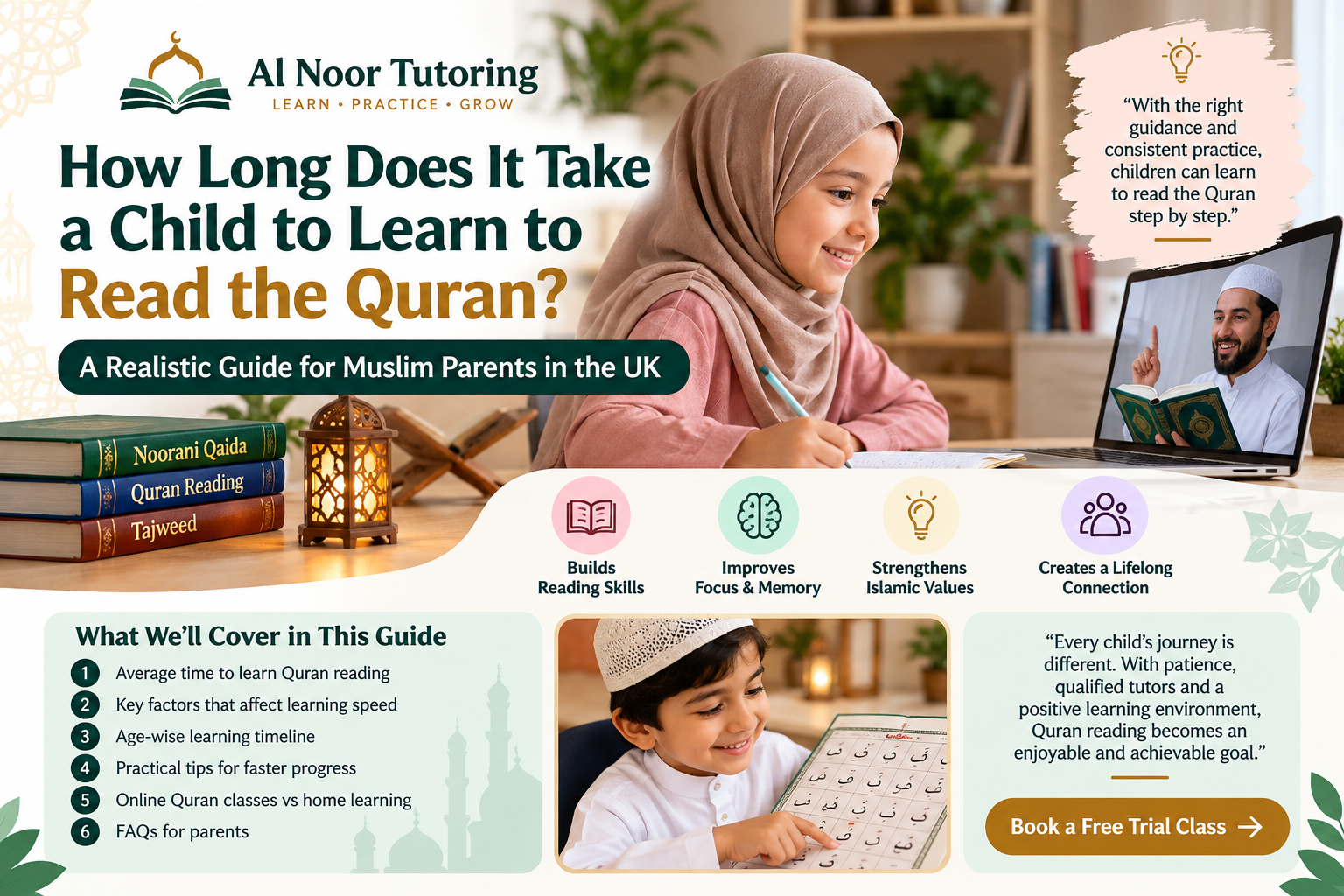
Many Muslim parents wonder how long does it takes a child to learn to read the Quran. Some children recognise Arabic letters quickly, while others need more time to understand pronunciation and join letters correctly. Every child learns at a different pace.
The good news is that children can make steady progress with suitable lessons, regular practice and patient guidance. In this guide, we explain the Quran learning timeline, the factors that affect progress and how parents in the UK can help their children develop strong reading skills.
How Long Does It Take a Child to Learn to Read the Quran?
A child may need several months to develop basic Quran Classes for kids, while becoming a confident and fluent reader can take longer. The exact time depends on the child’s starting level, lesson frequency, practice routine and teaching method.
Children who are new to Arabic usually begin with letter recognition and basic reading rules. Those who already know Arabic letters may progress to Quran reading sooner.
Here is a general guide to the learning stages:
| Learning stage | General timeframe | Main goal |
| Recognising Arabic letters | A few weeks to several months | Identify letters and sounds |
| Learning basic reading rules | Several weeks to months | Join letters and read simple words |
| Reading Quranic text | Several months or longer | Read words and verses with guidance |
| Improving fluency | Ongoing practice | Read more accurately and confidently |
| Learning Tajweed | Ongoing study | Apply appropriate recitation rules |
These are illustrative ranges, not guaranteed milestones. Some children progress faster, while others need additional time and revision.
What Factors Affect How Quickly Children Learn the Quran?
A child’s progress depends on several factors, including previous knowledge, consistency, lesson quality and individual learning needs. Understanding these factors helps parents set realistic expectations instead of putting unnecessary pressure on their children.
1. The Child’s Starting Level
Children who already recognise Arabic letters may move into basic reading sooner than complete beginners. Those starting from scratch usually need time to understand letter shapes, sounds and how letters connect.
2. Regular Practice
Short, consistent practice sessions can help children remember what they learn during lessons. Parents can ask the tutor to recommend an appropriate daily revision routine.
3. Teaching Quality
An experienced online Quran tutor for kids can identify pronunciation errors, explain difficult concepts and adjust lessons to the child’s ability. A supportive teaching style can also help children feel more confident.
4. Lesson Frequency
Children who attend lessons regularly may have more opportunities to practise and receive feedback. However, more lessons do not automatically mean faster progress if the child is tired or struggling to retain information.
5. Interest and Concentration
Children learn differently depending on their age, attention span and confidence. Interactive activities, encouragement and achievable goals can help make Quran learning more enjoyable.
What Should Children Learn First When Starting the Quran?
Children who are new to Quran reading generally benefit from learning Arabic letters and basic pronunciation before moving towards longer passages. A structured learning path helps them build the skills needed for more accurate reading.
A common learning sequence includes:
- Arabic letters: Recognise letter shapes and learn their sounds.
- Basic reading rules: Understand vowel marks and how letters connect.
- Noorani Qaida: Practise foundational reading skills through a structured approach.
- Quran reading: Begin reading Quranic words and verses with guidance.
- Tajweed: Learn and practise relevant rules of Quranic recitation.
- Fluency and revision: Improve accuracy through regular reading and feedback.
The sequence may vary depending on the child’s existing skills and the tutor’s assessment.
Parents can explore Noorani Qaida classes to understand how beginner-level Quran reading can be taught.
How Can Parents Help Their Children Learn Quran Reading Faster?
Parents can support progress by creating a consistent routine and making learning feel manageable. The goal is to help children practise regularly, understand their mistakes and build confidence over time.
Try these practical tips:
- Set aside a regular time for Quran revision.
- Keep practice sessions suitable for the child’s age and concentration.
- Encourage the child to repeat difficult letters and words.
- Ask the tutor which skills need more attention.
- Praise effort and improvement rather than comparing progress with other children.
- Review previous lessons before introducing too many new concepts.
- Make sure the child has enough rest and does not feel overwhelmed.
Remember: Learning quickly is not as important as developing accurate reading habits. Children should have enough time to understand what they are practising.
Are Online Quran Classes Helpful for Beginners?
Online Quran classes for kids UK can help beginners learn from home with guidance from a tutor. Live lessons allow children to practise reading aloud, receive corrections and work through lessons suited to their level.
When choosing online Quran classes for kids, parents should check:
- Whether the tutor has suitable Quran teaching experience.
- Whether the lessons cover Arabic letters and foundational reading.
- How the tutor corrects pronunciation.
- Whether parents receive progress updates.
- Whether class timings fit the family’s routine.
- What safeguarding arrangements the provider follows.
One-to-one lessons may provide more individual attention, while group lessons can offer peer interaction. The right format depends on the child’s learning needs and comfort.
Explore Al Noor Tutoring to learn more about the available Quran learning options for children and families.
How Can You Tell If Your Child Is Making Progress?
Progress is not measured only by how many pages a child can read. Parents should also look at reading accuracy, letter recognition, confidence and the ability to apply previously learned rules.
Signs of progress may include:
- Recognising more Arabic letters without help.
- Reading connected letters more confidently.
- Making fewer repeated pronunciation mistakes.
- Remembering previously learned reading rules.
- Reading short Quranic passages with better accuracy.
- Becoming more comfortable reading aloud.
Ask the tutor for regular feedback and clear learning goals. If progress seems slow, review the lesson method, practice routine and any areas where the child needs extra support.
Help Your Child Build Strong Quran Reading Skills
Every child follows a different learning journey. With suitable teaching, regular revision and patient encouragement, children can gradually develop their Quran reading skills and become more confident learners.
Choosing the right learning programme can make it easier for parents to support their child’s progress without unnecessary pressure.
Ready to support your child’s Quran learning journey? Visit Al Noor Tutoring to explore the available courses and enquire about a suitable starting point for your child.
Still have questions?
Ask a tutor directly, or claim your free class.
Frequently Asked Questions
Helpful answers for parents supporting their child's Quran learning journey.
Some children develop basic reading skills within several months, while others need longer. The timeline depends on their starting level, lesson frequency, and regular practice.
A child may make meaningful progress in three months, particularly with consistent lessons. However, reading fluently or mastering Tajweed may require substantially more time.
The ideal frequency depends on the child's age, learning goals, and schedule. Regular lessons combined with manageable revision can support steady progress.
Noorani Qaida is a common method for teaching foundational Arabic reading skills. A tutor can assess whether a child needs it or can begin at a more suitable level.
Yes, when lessons are age-appropriate and the tutor can keep the child engaged. Parents should check the teaching method, lesson length, and safeguarding arrangements.
Create a regular revision routine, encourage reading aloud, and follow the tutor's guidance. Keep practice positive and focus on accuracy rather than speed.
Comments are closed