

Learning the Quran is an important part of Islamic education. Many Muslim families want their children to learn Quran reading, Tajweed and correct pronunciation. Adults who have not learned the Quran before may also want to improve their reading skills.
With online learning becoming more common, students can now study the Quran from home with the help of qualified teachers.
But what is online Quran learning, how does it work and is it suitable for beginners?
In this guide, we will explain everything you need to know about online Quran learning, its benefits, how online classes work and how to choose the right Quran learning programme.
What Is Online Quran Learning?
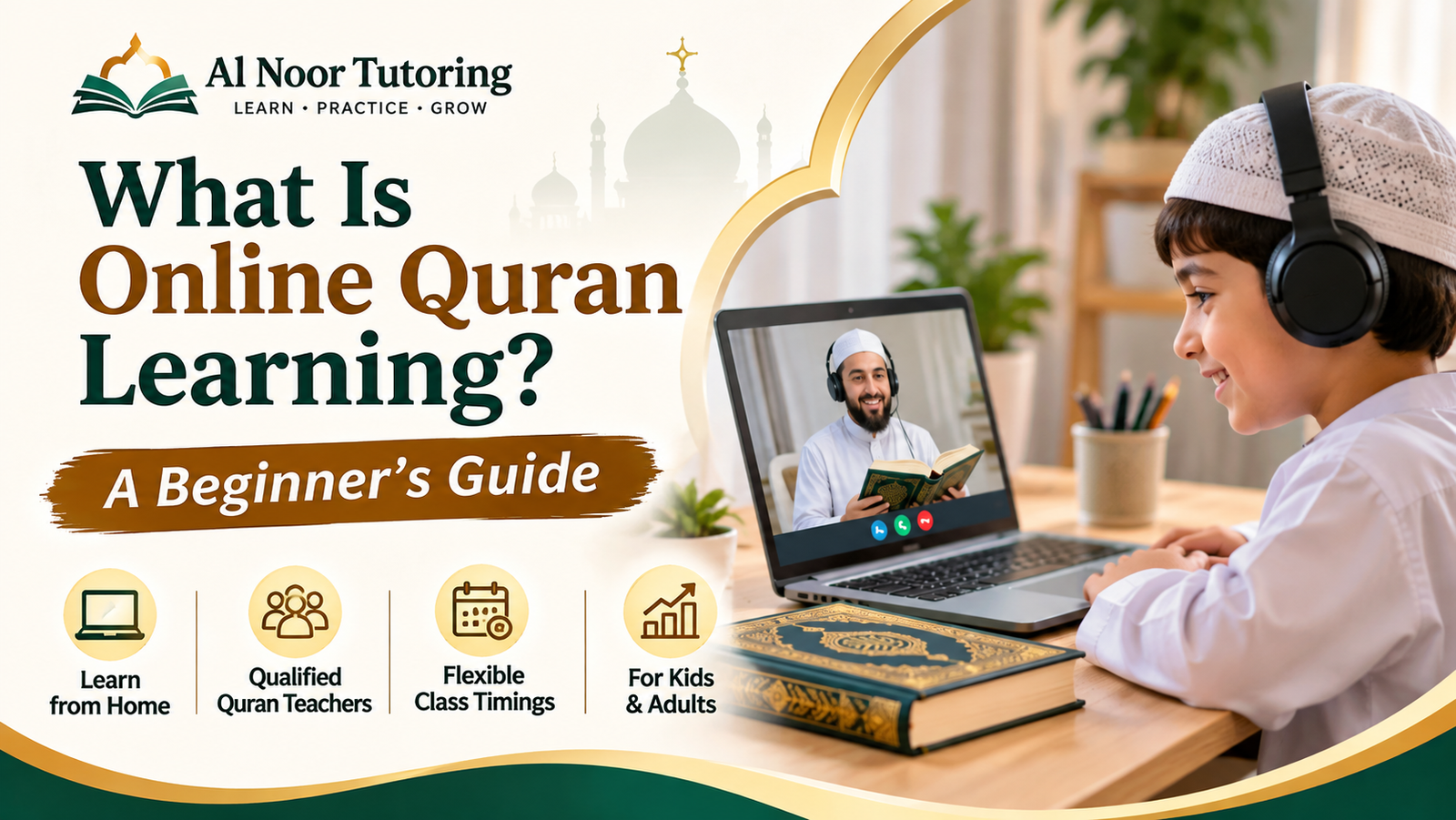
Online Quran learning is a way of studying the Quran through the internet with the help of a teacher. Instead of travelling to a mosque or Islamic learning centre, students attend lessons from home using a computer, tablet or smartphone.
These classes usually take place through video calling platforms, allowing students and teachers to communicate in real time.
Online Quran learning can include different subjects, such as:
- Quran reading for beginners
- Arabic letters and pronunciation
- Noorani Qaida
- Quran recitation with Tajweed
- Quran memorisation or Hifz
- Islamic learning for children and adults
Students can learn at their own pace with guidance from a teacher who helps them improve their reading and pronunciation.
How Do Online Quran Classes Work?
Online Quran classes are designed to make learning simple and convenient.
Although the exact process may vary between academies, most online Quran lessons follow a similar structure.
1. Choose a Quran Learning Programme
Students can choose a course based on their current knowledge and learning goals.
For example, a beginner may start with Noorani Qaida, while someone who can already read Arabic may want to improve their Tajweed.
Parents can also select suitable Quran lessons for their children based on their age and experience.
2. Attend Classes Online
Students join their lessons through a video calling platform using a laptop, tablet or smartphone.
The teacher explains the lesson, listens to the student’s recitation and provides guidance throughout the class.
3. Learn Quran Reading and Pronunciation
During the lesson, students practise reading Arabic letters, words and Quranic verses.
Teachers can correct pronunciation mistakes and explain how to read the Quran more accurately.
4. Practise Between Lessons
Regular practice is important for improving Quran reading.
Students may be encouraged to revise previous lessons, practise pronunciation and prepare for their next class.
5. Track Learning Progress
A structured learning programme helps students understand what they have learned and what they need to improve.
Regular feedback from the teacher can help students build confidence and develop better reading skills.
What Can You Learn Through Online Quran Classes?
Online Quran learning offers different programmes for students with different learning needs.
Noorani Qaida for Beginners
Noorani Qaida is commonly used to introduce beginners to Arabic letters, pronunciation and basic reading rules.
It can help students build the foundation needed for Quran reading.
If you or your child are starting from the basics, explore our Noorani Qaida classes.
Quran Reading with Tajweed
Tajweed refers to the rules used for correct Quran recitation.
Students learn how to pronounce Arabic letters properly and apply the relevant recitation rules.
Tajweed classes can be helpful for students who already know basic Quran reading and want to improve their recitation.
Quran Memorisation
Quran memorisation, also known as Hifz, involves learning and remembering Quranic verses.
Students may work on memorising short Surahs or follow a structured memorisation plan with regular revision.
Quran Classes for Kids
Children can start learning Quran through age-appropriate lessons.
A beginner programme may include Arabic letters, basic pronunciation, Quran reading and simple Islamic learning.
Parents can explore our Online Quran Classes for Kids to learn more about available learning options.
Quran Classes for Adults
Adults who have never learned Quran can also begin with basic Arabic letters and pronunciation.
Online lessons can provide a structured way to improve Quran reading while balancing work, family and other responsibilities.
What Are the Benefits of Online Quran Learning?
Online Quran learning can make Quran education more accessible for families and individuals.
1. Learn from Home
Students can attend Quran lessons from the comfort of their home.
This can be particularly helpful for families who live far from a suitable Quran learning centre.
2. Flexible Learning Schedules
Online classes may offer different lesson timings depending on the academy and teacher availability.
This can help parents and adult learners fit Quran learning into their daily routines.
3. Suitable for Beginners
Students do not need to know Arabic before starting Quran learning.
Many programmes begin with Arabic letters and basic pronunciation before moving towards Quran reading.
4. Individual Attention
Some online Quran academies offer one-to-one lessons.
This allows teachers to focus on the student’s reading level, pronunciation and learning progress.
However, the level of individual attention depends on the class format.
5. Convenient for Children and Adults
Online Quran lessons can be suitable for both children and adults.
Parents can arrange learning around school schedules, while adults can choose classes that fit their daily commitments.
6. Learn at Your Own Pace
Students may progress at different speeds depending on their experience and practice.
A structured programme with regular feedback can help learners identify areas where they need more support.
Is Online Quran Learning Suitable for Beginners?
Yes, online Quran learning can be suitable for beginners, provided the course is designed for their learning level.
Students who cannot read Arabic can begin with the basics.
A beginner’s learning journey may include:
- Learning Arabic letters
- Understanding letter sounds
- Practising connected Arabic letters
- Reading simple Arabic words
- Learning basic Quran reading rules
- Progressing towards Quran recitation
The learning process may take time, so beginners should focus on consistent practice rather than rushing through lessons.
How to Choose the Right Online Quran Academy?
Choosing the right online Quran academy is important for a positive learning experience.
Here are some factors parents and students should consider.
Qualified and Experienced Teachers
Look for teachers who have suitable Quran teaching experience and can explain lessons clearly.
For Quran recitation, teachers should be able to guide students in pronunciation and Tajweed.
Course Options for Different Levels
A good learning programme should offer courses for beginners, children, adults and students who want to improve their recitation.
Flexible Class Timings
Check whether class timings are suitable for your family or personal schedule, particularly if you are living in the UK.
Regular Feedback
Students benefit from teachers who explain mistakes and provide helpful feedback.
Parents should also understand how their child’s progress is monitored.
Trial Class Availability
Some academies offer trial lessons, which can help students understand the teaching approach before choosing a programme.
Clear Communication
Parents should be able to communicate with the academy regarding class schedules, progress and learning needs.
Online Quran Learning vs Traditional Quran Classes
Both online and traditional Quran classes can help students learn Quran reading and recitation.
The right option depends on the student’s learning preferences, location and schedule.
Online classes allow students to learn from home and may provide greater scheduling flexibility.
Traditional classes offer in-person interaction and a physical learning environment.
Students should choose the option that best supports their learning needs and helps them practise consistently.
Start Your Quran Learning Journey with Al Noor Tutoring
Learning the Quran is a meaningful journey that can begin at any age.
Whether you are a beginner, a parent looking for Quran classes for your child or an adult who wants to improve Quran reading, structured lessons can help you build your skills step by step.
At Al Noor Tutoring, students can explore online Quran learning options designed to support their Quran reading and learning journey.
Visit Al Noor Tutoring to learn more about our Quran learning programmes.
Final Thoughts
Online Quran learning provides a convenient way for children, adults and beginners to study Quran reading and recitation from home.
With suitable teachers, regular practice and a structured learning programme, students can gradually improve their Quran reading skills.
If you are ready to begin learning Quran or want to help your child develop their Quran reading skills, explore the online learning options available at Al Noor Tutoring.
Still have questions?
Ask a tutor directly, or claim your free class.
Frequently Asked Questions
Online Quran learning is a way of studying Quran reading, pronunciation, Tajweed or memorisation through internet-based lessons with a teacher.
Students attend lessons through video calling platforms. Teachers explain lessons, listen to recitation, correct mistakes and guide students through their learning.
Yes. Beginners can start with Arabic letters and basic pronunciation before progressing to Quran reading and recitation.
Yes. Children can attend online Quran lessons designed for their age and learning level. Parents should choose a programme with suitable teaching methods and class timings.
No. Many beginner courses start with Arabic letters and pronunciation, so students can build their reading skills gradually.
The time required depends on the student's starting level, learning goals, lesson frequency and practice. Beginners may need more time to develop Arabic reading skills before progressing to fluent Quran recitation.
Yes. Adults can begin Quran learning from the basics or work on improving their existing reading and recitation skills.
Comments are closed